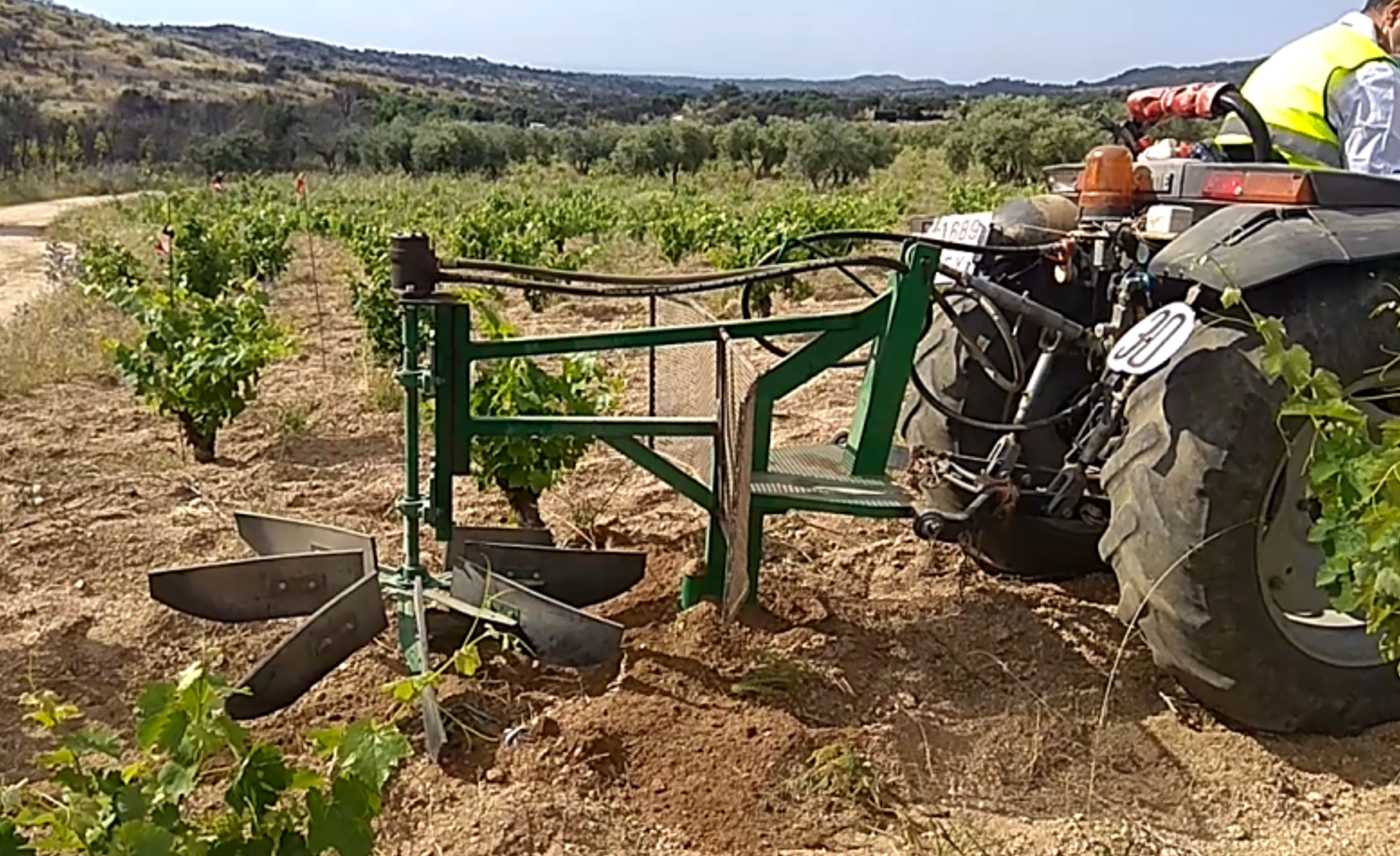

Between 2019 and 2022, Solid Forest participated in the SOLES Project, an initiative coordinated by IMIDRA to assess the viability of replacing conventional phytosanitary treatments with the application of soil dust as a method of protecting vineyards against powdery mildew. Throughout the three agricultural campaigns, our role was to provide the independent environmental analysis necessary to validate this technique from a scientific and objective perspective.
Environmental Analysis of Treatments
During the project, we developed the complete life cycle modeling of vine cultivation for each plot and treatment type: dust, sulfur, and control. This work included the recording and analysis of agricultural inputs, energy consumption, direct and indirect emissions, and production yields, integrated and evaluated using Air.e LCA™, our specialized life cycle assessment software.
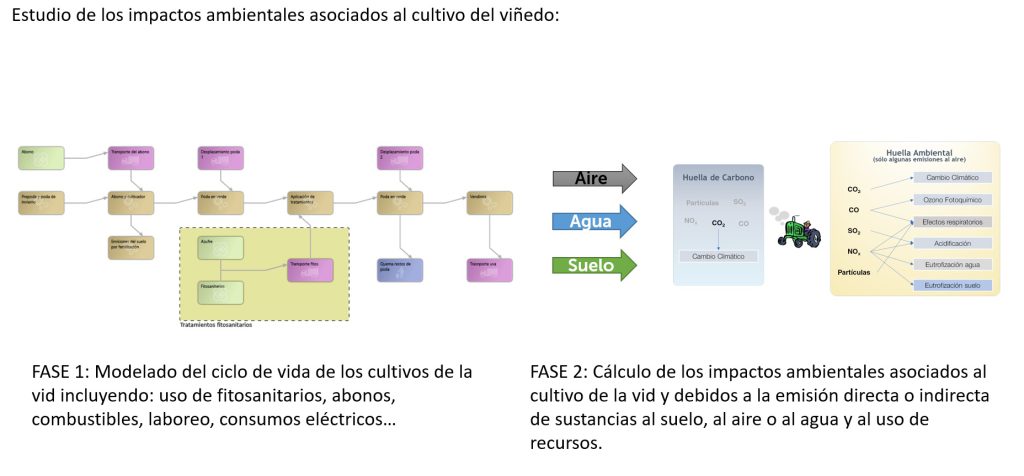
The results showed that the dust technique has the potential to reduce indirect environmental impacts, especially those derived from the manufacturing and transportation of phytosanitary products, presenting itself as a promising alternative for sustainable viticulture.
Foliar Analysis and Crop Evolution
In addition to the environmental component, Solid Forest collaborated in the integration and analysis of information from foliar monitoring using SENTINEL-2 multispectral satellite imagery, recorded throughout the three campaigns.
This monitoring enabled monthly assessment of vegetative development (NDVI), vigor evolution, plant response to each treatment type, and the influence of agronomic and climatic factors.
The foliar analysis helped contextualize the environmental results, relating impacts to the actual crop behavior in each plot, year, and treatment.
This monitoring enabled monthly assessment of vegetative development (NDVI), vigor evolution, plant response to each treatment type, and the influence of agronomic and climatic factors.
The foliar analysis helped contextualize the environmental results, relating impacts to the actual crop behavior in each plot, year, and treatment.
A Project Combining Tradition, Innovation, and Data
Thanks to Solid Forest’s participation, the Community of Madrid now has a complete scientific assessment—environmental and agronomic—of the efficacy and sustainability of this recovered traditional technique.
The work carried out provides a solid foundation to support strategic decisions regarding sustainable viticulture, input reduction, and transition toward production models with a lower environmental footprint.