
Life Cycle Assessment of Manure Management
We conducted for the agri-agency ACODEA a comparative study of the environmental impacts associated with different pig manure management systems on pig farms in Spain. For this, we used the Life Cycle Assessment methodology.
This study analyzed the four most common manure treatment systems used by pig farms in Spain. Below, each system and its implementation status in Spain are described:
DIRECT APPLICATION OF MANURE TO AGRICULTURAL SOIL
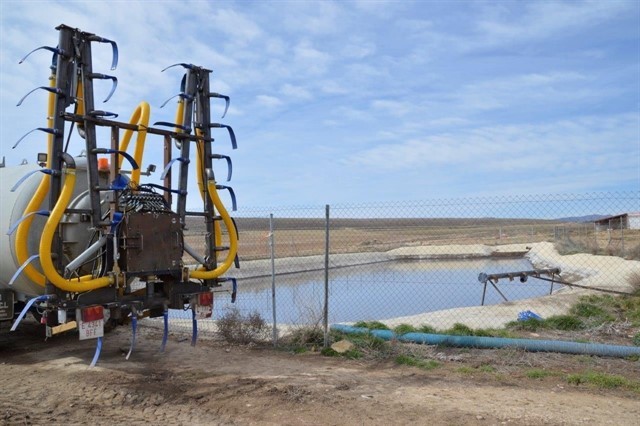
This involves collecting manure from pig farms using tanks and applying it directly to cultivated soil for fertilization. It is the most widespread treatment system in Spain. The problem with direct application is the extremely high concentration of pig farms in the regions of Aragon, Catalonia, Murcia, and Segovia, which leads to aquifer contamination and changes in soil composition due to excessive use of manure on crops. In 1996, “Vulnerable Zones” were defined, where the maximum allowed nitrogen amount is 170 kg per hectare per year. The new regulatory change implemented in 2018 prohibits the use of splash plate, fan, or cannon systems for manure application on agricultural holdings, replacing them with application systems that incorporate manure into the soil.
DIRECT THERMAL DRYING (NATURAL GAS COGENERATION PLANT)
This involves drying manure with heat produced by a natural gas combustion cogeneration plant to obtain a stable and manageable fertilizer. The electricity generated in cogeneration is fed back into the grid, and the heat is used in the drying plant to produce fertilizer from the manure. In 1998, aid premiums were established for cogeneration plants dedicated to manure treatment. These aids were eliminated in 2012, leading to the closure of the 29 cogeneration plants installed in Spain. Currently, with the reintroduction of aid in 2018, some of these cogeneration plants are resuming operation.
COMPOSTING WITH BIOLOGICAL TREATMENT
This method is based on stabilizing the organic matter found in manure through composting. First, the solid part of the manure is separated from the liquid part using mechanical methods, with fluidizers added during the process. Subsequently, the solid part is mixed with vegetable or biodegradable waste for aerobic decomposition, a process that lasts 3 or 4 months. The liquid fraction is used for fertigation. As for the biological treatment of manure, it involves adding physicochemical systems to the manure to facilitate aerobic decomposition. Due to its low carbon and high nitrogen content, manure has a very slow decomposition process, which is accelerated by these treatments. At the end of the process, compost with improved characteristics for crop fertilization is obtained. In some cases, compost production does not include the application of biological treatments.
BIOMETHANIZATION AND EVAPORATION (DIGESTATE COGENERATION PLANT)
These plants enable biogas production through anaerobic digestion of manure mixed with vegetable waste. This biogas is used as fuel in the cogeneration plant itself, generating electricity and heat. The heat generated is used to dry the digestate residues and to maintain the necessary temperature for anaerobic digestion to occur. The solids produced as waste in these cogeneration plants are used as fertilizer for crops. Currently, there are few biodigestion plants installed in Spain due to their high cost.