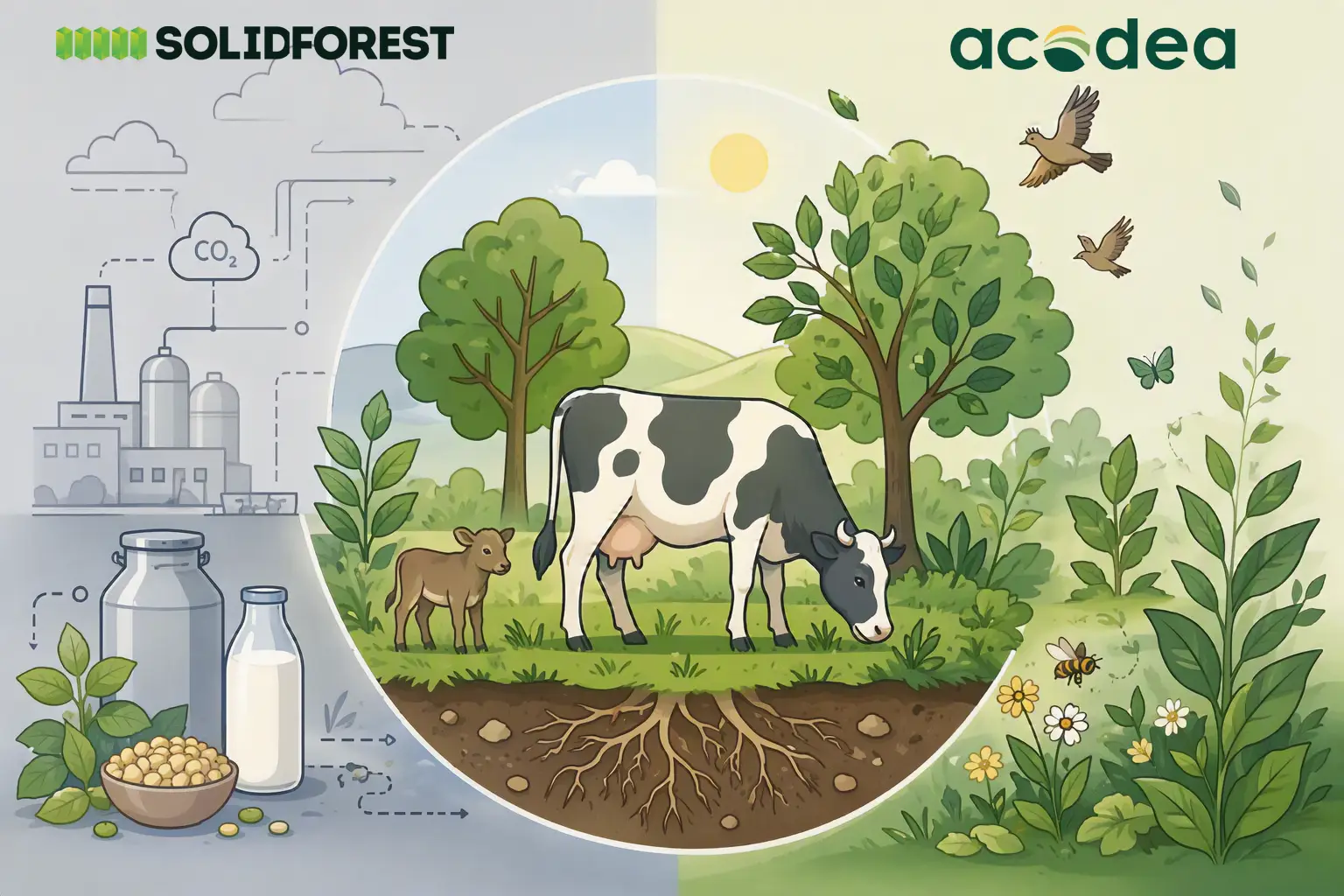
Efficiency: A Key Factor in Reducing the Environmental Impact of Dairy Farms
Acodea’s research on Spanish farms demonstrates that the sustainability of dairy production depends more on the efficiency of resource use

We perform Life Cycle Assessments (LCA) for products and organizations to evaluate, verify, and reduce their environmental impact through ISO methodologies and technical rigor. We use Air.e LCA, a specialized professional software that guarantees data traceability, process transparency, and calculation reliability.
A complete Life Cycle Assessment (LCA) allows for the systematic quantification and understanding of the environmental impacts associated with a product, process, or organization, from raw material extraction and processing to end-of-life, based on the boundaries and objectives defined for the study. As a Spanish company with an international presence specializing in Life Cycle Assessment (LCA) and environmental metrics, we develop our studies in accordance with the principles and requirements established in the UNE-EN ISO 14040 and UNE-EN ISO 14044 standards, which constitute the international reference framework for the definition, performance, interpretation, and communication of life cycle studies.
We accompany your organization through the four fundamental phases of LCA, from the definition of the goal and scope to the clear interpretation and communication of results, applying recognized methodologies and professional calculation tools.
We establish the system boundaries (cradle-to-gate, cradle-to-grave, or gate-to-gate) and define the functional unit of reference for the study. This stage ensures that the results meet the company’s needs, whether for regulatory compliance, process optimization, or commercial communication.
We determine the level of precision and technical detail required for the model to be traceable and auditable by third parties. In this way, the initial structure is not only suitable for internal use but is also prepared for future external verifications, audits, or validations.
In this phase, we collect, structure, and quantify the system’s inputs and outputs, considering material, water, and energy flows, as well as emissions, discharges, and waste. Our team works in close collaboration with the client’s technical departments to organize and document primary data, ensuring its quality and traceability, and complements it, when necessary, with internationally recognized databases such as Ecoinvent, EF 3.1, and sector-specific data.
Based on this information, we model the direct and indirect flows of the activity using our specialized software, Air.e LCA, guaranteeing traceability from the source data to the inventory result. In this way, we transform operational information into a structured, transparent, and traceable inventory, reducing uncertainties and avoiding methodological gaps.
Based on the inventory obtained, we transform the data inventory into specific environmental indicators by applying validated characterization methodologies, such as ReCiPe, CML, EF 3.1, IPCC. In this phase, we evaluate various impact categories, including carbon footprint, water footprint, resource depletion, eutrophication, acidification, and toxicity, obtaining a complete environmental profile of your product or service analyzed through LCA.
We translate inventory consumption into comparable impact categories under international standards. This allows for a clear visualization of which aspects of the activity generate the greatest environmental pressures, facilitating the interpretation of the results.
We analyze the critical points or environmental hotspots of the system to identify the stages with the greatest room for improvement. We deliver a complete report oriented toward decision-making, facilitating subsequent auditing and technical preparation if you are seeking life cycle assessment certification through an independent third party.
We draw clear conclusions and actionable recommendations to guide the company’s strategy toward changes with significant impacts. Furthermore, we structure the study to facilitate its subsequent application in Environmental Product Declarations (EPD) or Eco-design Plans, depending on the organization’s objectives.
The Life Cycle Assessment study provides the objective and quantifiable basis to support the environmental strategy of a product or the organization itself. Its main applications include:
It allows for the generation of information required by Product Category Rules (PCR) under programs such as The International EPD System, Global EPD, or the Environmental Footprint Institute. We transform the study data into a technical profile ready for external verification and integration into sector databases.
If you need to take the next step, obtain your EPD from the LCA.
It allows for the evaluation of the environmental impact of different alternatives before implementing them, such as material substitution, packaging redesign, process modification, or changing suppliers. Through scenario simulation, it is possible to compare options and anticipate their environmental consequences, facilitating strategic decision-making based on quantifiable and verifiable sustainability metrics from the design phase. If you want to integrate this methodology permanently, apply the results to eco-design.
It allows for the comparison of different manufacturing alternatives or products under the same environmental criteria to understand which option offers better performance and where the greatest opportunities for improvement exist. For example, if a company is considering keeping plastic packaging, changing it to cardboard, or reducing the amount of material used, the analysis allows for the quantification of the impact of each alternative and making the decision with real data, not just perceptions.
In this way, benchmarking helps identify competitive advantages supported by rigorous results, compare the environmental performance of different product lines, and prioritize investments and improvement actions where they can generate the greatest environmental impact.
It responds to the growing demands of major clients and public tenders that require environmental metrics verified under ISO standards.
It facilitates early adaptation to European directives on eco-design, corporate sustainability, and ecological labeling, ensuring that the company maintains its competitiveness in markets with high environmental standards.
Finally, correct communication provides scientific data backed by international standards to support corporate communication and avoid greenwashing risks. It offers transparency to customers, investors, and stakeholders regarding the real environmental performance of your products or services. It reinforces brand credibility through auditable and methodologically sound evidence.
We model and calculate Life Cycle Assessment studies with Air.e LCA, our proprietary tool developed by the Solid Forest technical and IT team.
This platform allows us to manage complex models with total transparency, calculate multiple impact categories instantaneously, and generate technical reports ready for verification.
For more than 15 years, we have developed life cycle projects for SMEs, large corporations, and public administrations in various sectors:
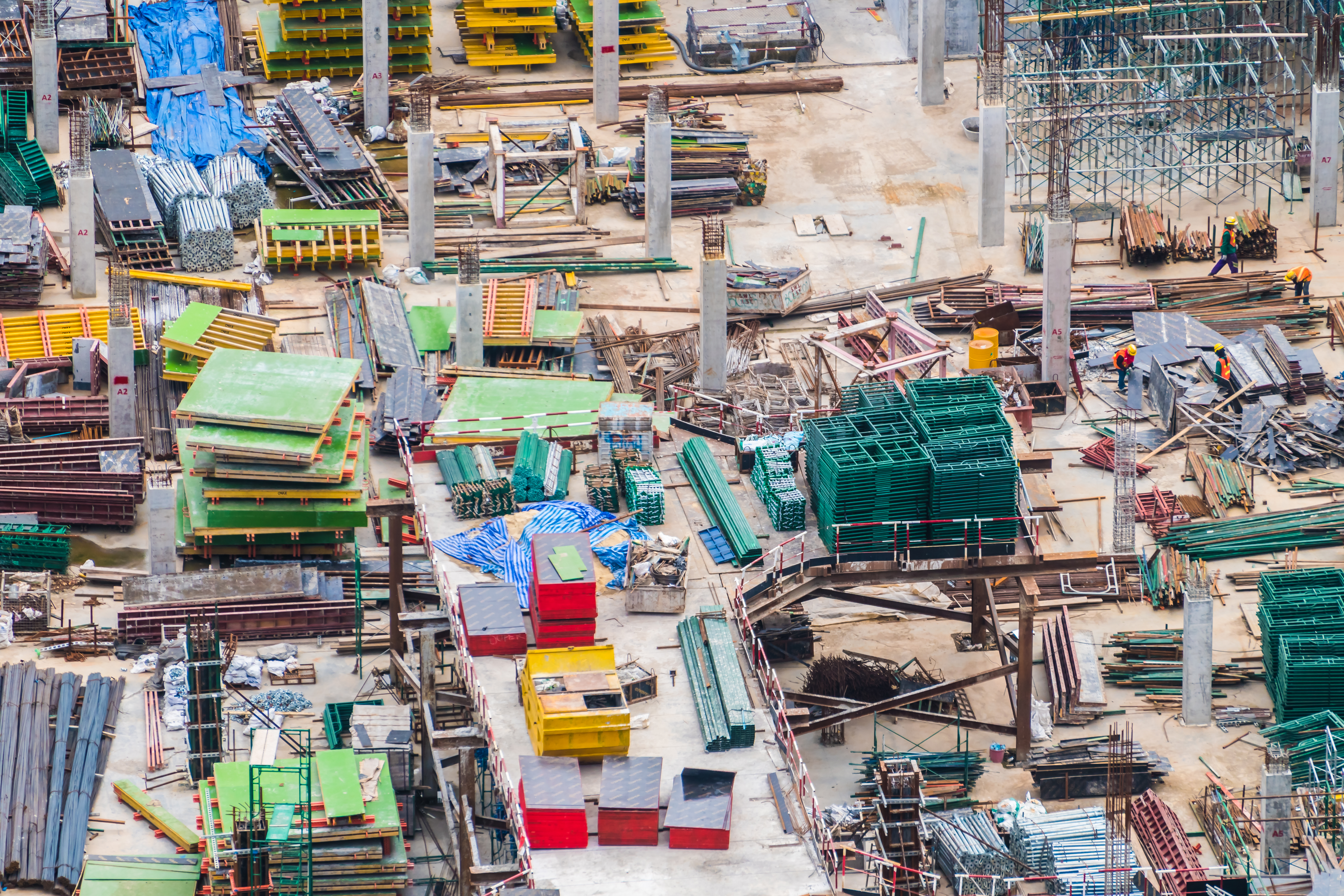
Study and modeling of concrete, aggregates, insulation, joinery, metal profiles, and precast elements to obtain Environmental Product Declarations.
Comprehensive analysis of agricultural processes, industrial transformation, packaging, and distribution to quantify the global environmental footprint of food and beverages.
Comparative evaluation of materials (plastics, cardboard, compostable, glass) to identify the option with the lowest environmental impact and optimize eco-design.
Calculation of environmental impacts in complex formulations, raw material synthesis, cosmetics, and medical containers under ISO methodology.
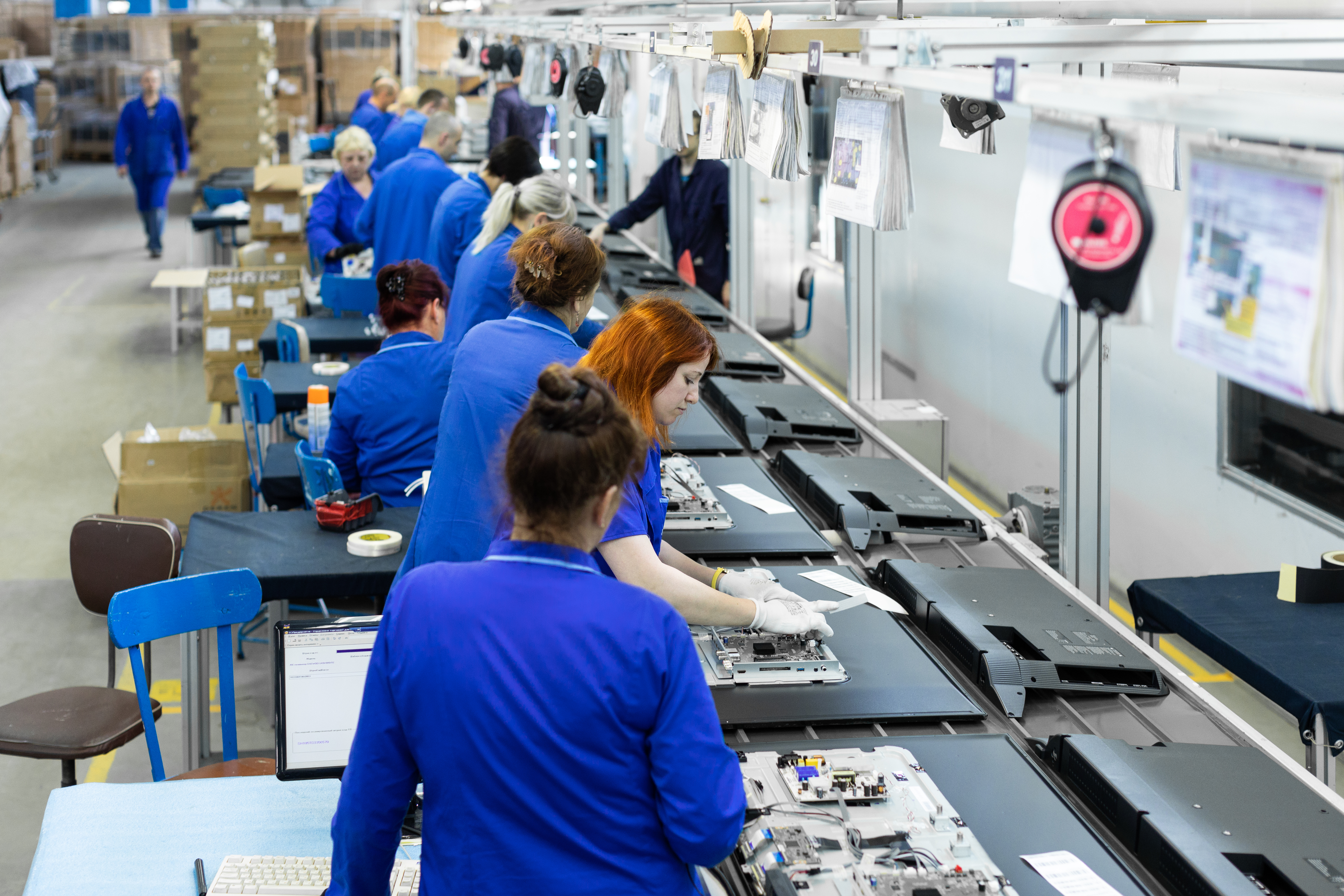
Life Cycle Assessment of industrial machinery, electronic components, lighting, and electromechanical equipment for process improvement and footprint reduction.
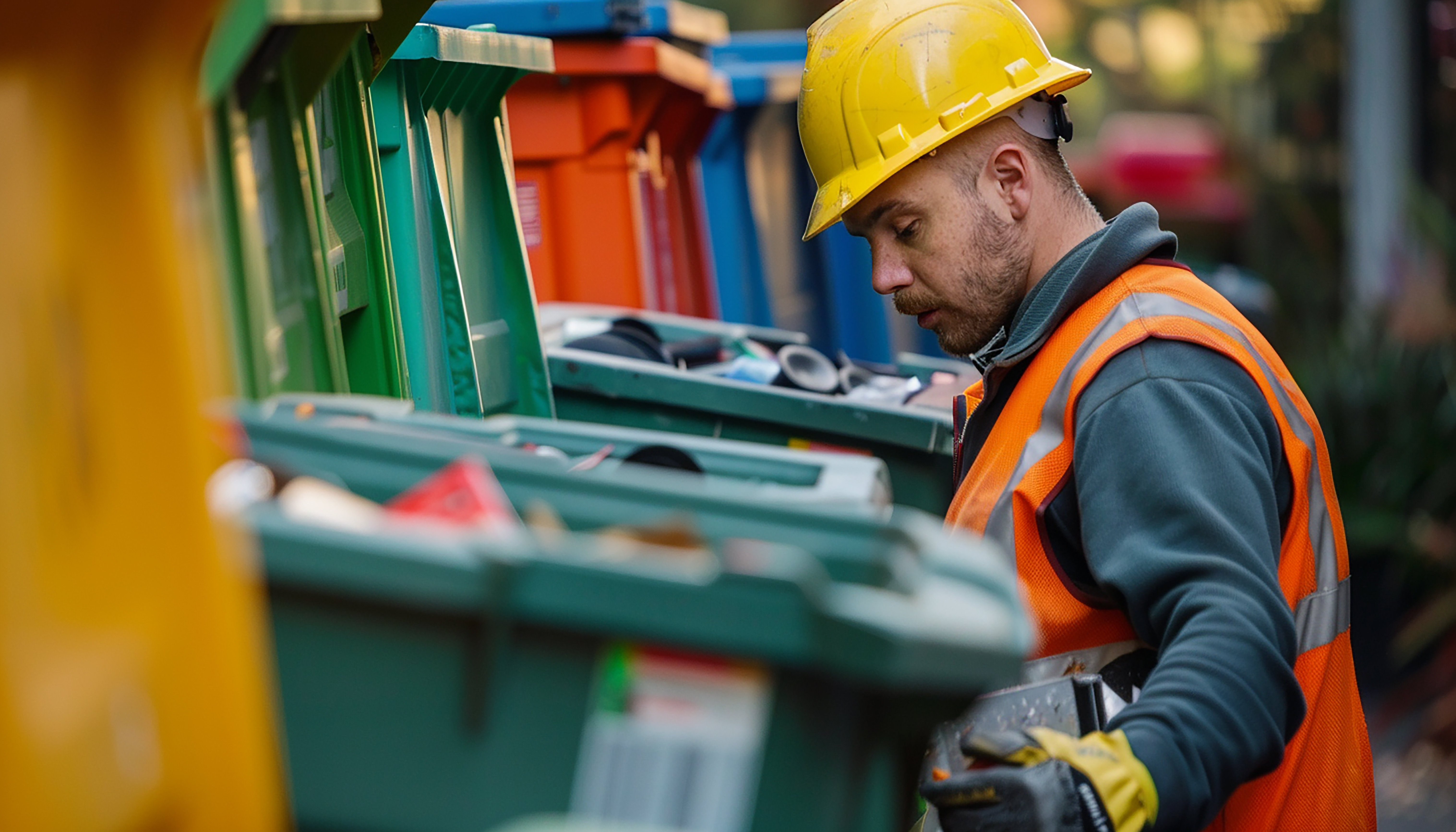
Environmental performance assessment of collection, recycling, and waste recovery systems, as well as logistic or intangible service models.

Acodea’s research on Spanish farms demonstrates that the sustainability of dairy production depends more on the efficiency of resource use

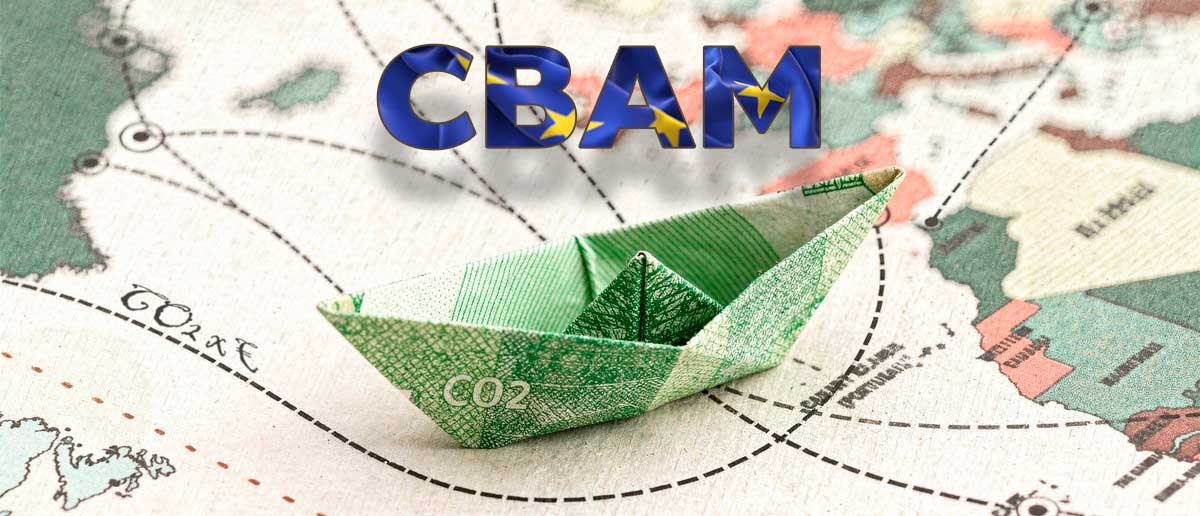
The Carbon Border Adjustment Mechanism (CBAM) will change the cost of imports in the EU starting in 2026. Key points,
In collaboration with Holcim Spain, we developed a web tool for companies in the concrete sector to support them in
Adding {{itemName}} to cart
Added {{itemName}} to cart