Efficiency: A Key Factor in Reducing the Environmental Impact of Dairy Farms

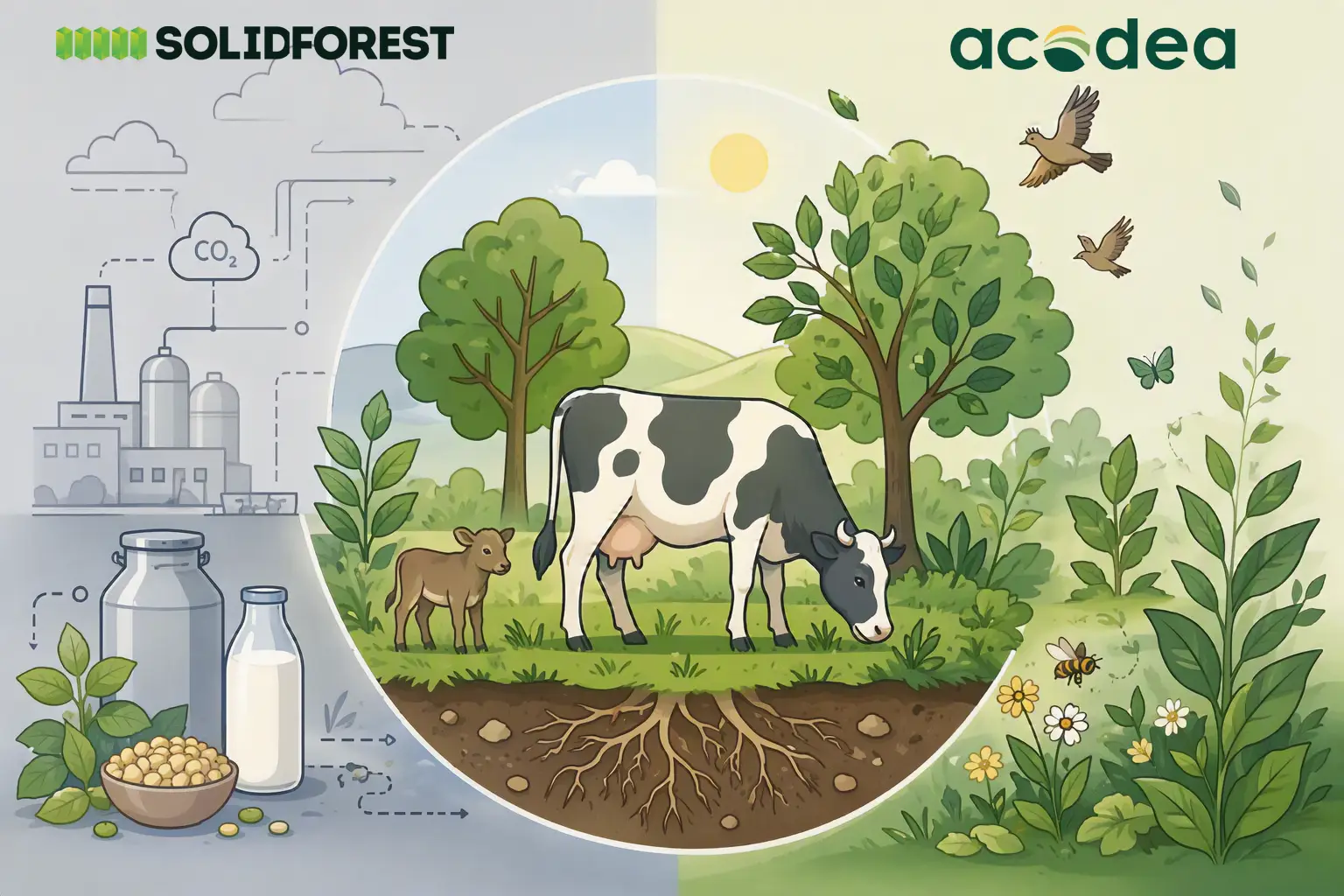
The carbon footprint and biodiversity analysis conducted by Acodea and Solid Forest focuses reduction efforts on production efficiency and the origin of the resources used.
What factors truly determine the sustainability of dairy farms?
The Carbon Footprint: Beyond What We See
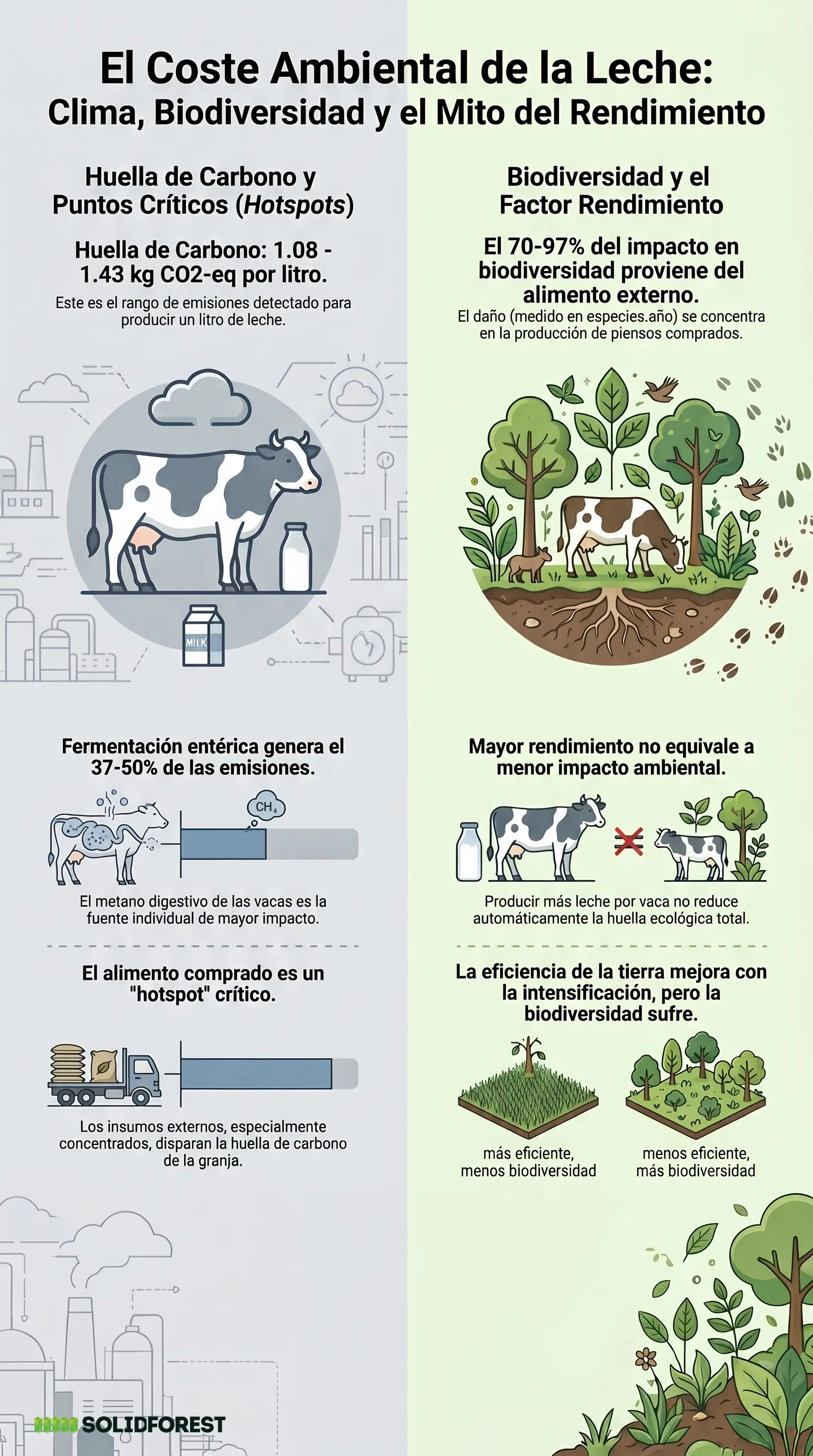
Using Life Cycle Assessment (LCA), we discovered that the carbon footprint of one liter of standardized milk ranges between 1.08 and 1.43 kg of CO₂ equivalent. But where do these gases come from?
- “Internal emissions”: Methane from cow digestion (enteric emissions) represents between 37% and 50% of the total impact.
- The external pantry: Feed purchased outside the farm is the second major contributor, accounting for up to 51.6% of the footprint in some cases.
Biodiversity: The Invisible Impact
For the first time, we measured the impact on terrestrial biodiversity in species.yr (species potentially disappearing per year). The results (between 1.35 E-11 and 2.63 E-11 species·year) revealed a striking finding: the production of purchased feed is responsible for up to 97% of the damage to biodiversity. This is mainly due to deforestation for agricultural crops and the intensive use of fertilizers and pesticides at source.
The Yield Myth
One of the most revealing findings was that higher yield per cow does not guarantee a lower environmental footprint. For example, Farm 7, with the highest production per animal, recorded the highest carbon footprint, while farms with higher feed consumption but better management achieved better environmental profiles.
Conclusion: The Answer to the Dilemma
So, does the farm that produces the most cause the most damage? Not necessarily. The research concludes that the key to sustainability does not lie in the volume of milk, but in the efficiency of resource use and the origin of external inputs. Reducing dependence on feed associated with deforestation and optimizing the diet to reduce methane are far more effective strategies than simply seeking maximum yield per animal. True efficiency is producing quality while protecting the global ecosystem.
Sustainability is no longer just a matter of environmental commitment, but also of competitiveness and adaptability. Understanding where the main impacts are generated allows for the identification of improvement opportunities, risk reduction, and anticipation of demands from clients, administrations, and consumers. At Solid Forest, we work with companies, cooperatives, research centers, and administrations to develop Life Cycle Assessment studies, environmental footprints, R projects, and science-based solutions that contribute to a sustainable transition.